
Skill Points belong to the team; Energy belongs to the Character
Skill Points and Energy answer different questions. Skill Points determine whether the team can pay for an action that uses them. Energy fills an individual Character’s Ultimate gauge. Having plenty of one does not automatically solve a shortage of the other.
The shared Skill Point pool is why four powerful Skills do not necessarily make a functional team. Each Character must fit into a sequence the team can afford. At the same time, an ally with a ready Ultimate cannot normally donate that full gauge to someone else.
Scroll horizontally to see all columns.
| Resource | Who owns it? | What to watch |
|---|---|---|
| Skill Points | The team shares one pool. | The cost of this action and what the next ally will need. |
| Energy | Each Energy-using Character has their own gauge. | Their Ultimate requirement and the sources that refill it. |
| Special charges | The particular kit defines them. | The named resource and its own gain/spending rules. |
Learn the ordinary exchange, then check the kit
Under the ordinary rules, a Basic ATK restores one Skill Point and a Skill costs one. The normal pool holds up to five. This creates an exchange: some actions fund the team while others spend its shared resource.
These are the baseline rules, not promises about every ability. Enhanced Basic ATKs may not restore a point; some actions spend multiple points or use substitute resources. Abilities can also restore points or increase the cap. Check the action’s description rather than inferring the cost from its button or animation.
At the cap, another ordinary Basic cannot bank an extra point for later. That does not mean it is always wrong to use one: the attack may still provide damage, Toughness reduction or Energy. It means the Skill Point part of that action has no additional storage space.
A useful starting habit is to glance at both the pool and the action order before spending. The important question is not just “can I use this Skill?” but “what will the next ally be able to do?”
Budget for the next few actions
Consider an illustrative sequence with two points in the pool. A support acts first, followed by an attacker and a healer. Assume their Skills each cost one, and their ordinary Basics each restore one. There are no refunds or special effects in this example.
Scroll horizontally to see all columns.
| Action | Spend on the support Skill | Use the support Basic |
|---|---|---|
| Support acts | 2 − 1 = 1 remaining | 2 + 1 = 3 remaining |
| Attacker uses Skill | 1 − 1 = 0 remaining | 3 − 1 = 2 remaining |
| Healer acts next | No point available for the assumed one-point heal. | The assumed one-point heal remains available. |
This does not make the support Skill a bad move. It may prevent damage or enable a decisive attack. The example shows the trade: spending now changes the choices available later. A ready healing Ultimate or a real kit’s refund would change the calculation.
Players call a sequence Skill Point positive when it restores more than it spends, negative when it spends more, and neutral when the totals balance. Those labels describe the actions actually used. A Character is not permanently positive or negative regardless of their rotation.
Energy charges an individual Ultimate
Most Characters use Energy to ready their Ultimate. Actions, incoming hits and specific abilities or equipment can restore it, but the amounts and conditions vary. Do not assume every Basic, Skill or follow-up attack supplies the same amount.
Look at the Character’s own requirement and refill pattern. A healing Skill can help charge a healing Ultimate even though it deals no damage. Conversely, an impressive attack animation does not tell you how much Energy it restores.
This creates two linked but separate decisions. A Skill might improve Energy generation while consuming a team point. An ordinary Basic might refill the shared pool while providing a different amount of Energy. Choose with both gauges in mind.
More regeneration only helps the sources it affects
Energy Regeneration Rate increases applicable Energy gains. It does not reduce the Ultimate’s stated cost, create Skill Points or replace a kit’s special charge system. Effects described as restoring a fixed amount follow their own rule; do not multiply every Energy number indiscriminately.
An Energy-focused Light Cone is another possible source, but its trigger still matters. Meshing Cogs requires an attack by its wearer or a hit against them. A non-attacking support action does not satisfy the attack trigger.
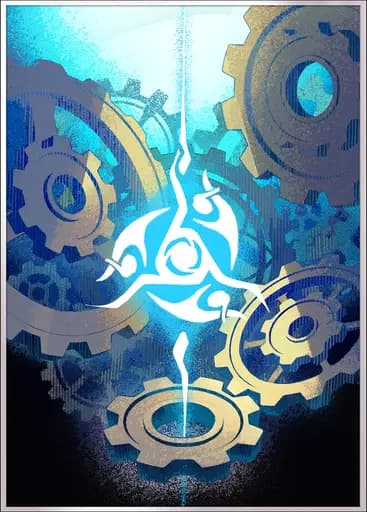
Meshing Cogs: read the complete condition
Harmony wearer. A qualifying attack or incoming hit restores extra Energy, with a once-per-turn restriction. Increasing the rank does not remove that restriction.
The practical goal is to reach the Ultimate when it matters. An extra amount that changes a needed action into an earlier Ultimate is more useful than an impressive percentage with no effect on the sequence you play. Test against the actual encounter, because incoming hits and other situational gains are not guaranteed to repeat.
A special resource follows its own instructions
Some kits change the resource model. Acheron uses Slashed Dream for her Ultimate instead of ordinary Energy. Firefly’s unenhanced Skill explicitly restores a fixed share of her maximum Energy. Those are different mechanisms, even though both help prepare an Ultimate.
Similarly, an ability that restores Skill Points or raises their cap changes the team budget. It does not make every teammate’s Skill free. Read the resource name, recipient and trigger before assuming a familiar buff will work.
Use the Kit tab to answer three questions
- What resource does this action actually consume?
- Which actions or events generate that resource?
- Does an enhanced state replace the ordinary rules?
The Characters directory leads to the full ability descriptions. Use those for individual rules; use this guide for the underlying distinction between a shared budget, personal Energy and custom charges.
A full gauge is an option, not an instruction
A ready Ultimate can often be queued outside its owner’s normal turn, when the current battle state allows it. It is not permission to interrupt every animation at any instant. Check the action queue and whether the Character can act.
Holding a healing Ultimate can provide an emergency response. Waiting for a buff or a Weakness Break window can improve a damaging one. But holding a full gauge also risks wasting later Energy gains. Neither “always press it immediately” nor “always save it” is a complete plan.
Ask what the Ultimate needs to accomplish before the next dangerous action. Then decide whether using it now also improves the next Skill Point decision.
Put it into practice
Watch one short sequence without auto-battle. Before each action, name the points it spends or restores and check the acting Character’s Ultimate gauge afterward. If the next ally cannot use a needed Skill, look one action back rather than assuming the problem is a lack of damage stats.
Continue with Light Cone fundamentals for equipment conditions and Relic Stats for the build’s stat choices. Exact rotations and recommendations remain on Character Guide tabs, where their kit-specific assumptions can be made explicit.