
What Relics do
A Relic is a piece of equipment that changes a Character’s stats. It can give them more HP, help them act faster, or improve the stats their abilities use. Relics do not replace Character levels, Traces or a Light Cone: they are another part of the build.
Each piece has one main stat, a group of smaller substats, and membership of a set. These are three separate things to read. The main stat grows as you enhance the piece; substats develop at upgrade checkpoints; set effects depend on what else the Character equips.
Before asking whether a Relic is good, learn what it can change. Start with the six places it can fit.
Two families, six slots
A full loadout combines four Cavern Relics with two Planar Ornaments. Planar Ornaments are part of the Relic system, not an alternative to filling the other four slots.
Cavern Relics occupy Head, Hands, Body and Feet. Planar Ornaments occupy Planar Sphere and Link Rope. A piece can only go in its own slot: another Head piece cannot fill an empty Body slot, even when both belong to the same set.
Cavern Relics
 Head
Head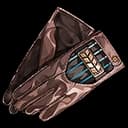 Hands
Hands Body
Body Feet
Feet
Planar Ornaments
 Planar Sphere
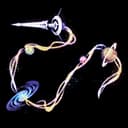 Link Rope
The families also have different acquisition routes. Caverns of Corrosion supply Cavern Relics; Planar Ornament farming belongs to the Simulated Universe family of activities. Use the game’s source information for the particular set you want rather than assuming every set drops in the same place.
A slot determines the possible main stats. A set determines the additional effects you can activate. Changing the set does not give a Head piece access to a Body piece’s main stats.
The main stat gives the piece its starting purpose
The main stat is the single primary bonus on a Relic. Its value increases with enhancement. Its type normally stays the same: leveling HP% Boots does not turn their main stat into SPD.
Head always gives flat HP; Hands always gives flat ATK. The other four slots have a choice of possible main stats. “Flat” means a fixed amount, such as ATK, rather than a percentage bonus such as ATK%.
| Slot | Possible main stats |
|---|---|
| Head | HP (flat)Fixed main stat |
| Hands | ATK (flat)Fixed main stat |
| Body | HP%, ATK%, DEF%, CRIT Rate, CRIT DMG, Outgoing Healing Boost, Effect Hit RateVariable main stat |
| Feet | HP%, ATK%, DEF%, SPDVariable main stat |
| Planar Sphere | HP%, ATK%, DEF%, or one Element’s DMG BoostPhysical, Fire, Ice, Lightning, Wind, Quantum or Imaginary |
| Link Rope | HP%, ATK%, DEF%, Break Effect, Energy Regeneration RateVariable main stat |
A Planar Sphere’s Elemental DMG Boost applies to one Element. It is not a bonus to all seven. Likewise, Energy Regeneration Rate is a Link Rope main-stat option; it is not something you can roll as a substat elsewhere.
Substats add detail to the build
Below the main stat, a Relic can have up to four different substats. Every slot draws from the same substat pool, so you can find useful SPD or CRIT on pieces whose main stat does something else.
The pool contains flat HP, ATK and DEF; HP%, ATK% and DEF%; SPD; CRIT Rate; CRIT DMG; Effect Hit Rate; Effect RES; and Break Effect. Outgoing Healing Boost, Elemental DMG Boost and Energy Regeneration Rate are not substats.
No duplicate stat types on one piece
A substat cannot repeat another substat or match the main stat’s exact type. HP% and flat HP count as different types, so a piece with HP% as its main stat can still have flat HP underneath it.
For example: a Body piece with CRIT Rate as its main stat cannot also have a CRIT Rate substat. It can have CRIT DMG. This restriction belongs to the piece, not the Character’s total: other equipped pieces can still supply CRIT Rate.
Flat and percentage bonuses are not interchangeable. For ordinary ATK bonuses, ATK% scales the combined base ATK of the Character and Light Cone, while flat ATK is added afterward. That does not make ATK the right goal for every Character; an ability may use a different stat entirely.
Enhancement grows the main stat and develops substats
Enhancing a Relic spends materials to raise its level. The main stat grows along the way. At each three-level checkpoint, the piece either reveals another substat or increases one it already has.
A 5-star Relic starts with three or four substats and can reach +15. If it begins with three, the +3 checkpoint reveals the fourth. With all four present, later checkpoints increase an existing substat. You do not choose which one receives that increase.
Scroll the comparison horizontally to follow every checkpoint.
| At level 0 | +3 | +6 | +9 | +12 | +15 |
|---|---|---|---|---|---|
| 3 substats | Reveal a fourth | Increase one | Increase one | Increase one | Increase one |
| 4 substats | Increase one | Increase one | Increase one | Increase one | Increase one |
Starting with four substats gives the piece one more opportunity to increase an existing stat. It does not guarantee a better result: those increases still need to land on stats the wearer can use.
The +15 comparison is specifically for 5-star pieces. Lower rarities have lower level caps. While progressing, judge the equipment available to you rather than treating an endgame target as a requirement to keep playing.
Set bonuses depend on the whole loadout
A set effect is additional to the stats written on each piece. Cavern sets have two-piece and four-piece effects; Planar sets have a two-piece effect. Pieces from one family do not count toward the other family’s set.
The four Cavern slots can activate one four-piece set, or two different two-piece sets. Mixing pieces does not switch off their individual main stats and substats; it changes which set effects are available.
An effect can have a condition
The Space Sealing Station ornaments shown above illustrate this distinction. Their two-piece effect adds ATK, with another ATK bonus when the wearer meets its SPD requirement. Owning two pieces establishes the set; meeting the condition establishes the extra benefit. Read both parts before deciding what a set contributes.
The Relics directory contains the individual set effects. Use it to check exact requirements rather than assuming every bonus is always active.
Now evaluate the piece for its wearer
Once you know what the numbers mean, start with the Character’s abilities. What stat does their damage, healing or protection scale with? What conditions must they meet? A useful piece supports that job, rather than chasing one universal score.
- Check main-stat fit first. The correct set name does not rescue a main stat that does little for the intended wearer.
- Look for useful substats. A row of CRIT is not automatically valuable to every build. Think about the stats this Character and team actually use.
- Check the equipped set and its conditions. A replacement can improve one number while losing a set effect or a required stat elsewhere.
- Reassess after enhancement. A reveal or upgrade gives you new information. Materials already spent are not a reason to finish a piece you will not use.
Compare the change, not an isolated number
Imagine replacing ATK% Feet with SPD Feet. The visible ATK total may fall, but the Character’s action order may change. That trade can help or hurt the team’s plan. Check the equipped build and test the same encounter with the same team before declaring the new piece an upgrade.
For Character-specific priorities, use the Guide tab on Character pages. This article teaches the equipment rules; those pages connect the rules to an individual kit.
Customization changes a different part of the process
Ordinary enhancement develops a piece you already own. Customized Synthesis and Variable Dice address different decisions:
- Customized Synthesis uses Self-Modeling Resin to select starting main stats and substats when creating a Relic.
- Variable Dice redistributes enhancement results on a +15 gold Relic, with a choice between the old and new result.
Choosing starting stats does not guarantee the later enhancement rolls you want. Before spending rare materials, read the current in-game confirmation screen for eligibility and costs. Resource income and interface details are more changeable than the slot rules above.
The game also supports saved Relic presets. They can help you return to an equipment arrangement when comparing builds, but saving a preset does not improve its stats.
Put it into practice
Pick one Character you already use. Check their six slots, identify the main stat on each piece, then read the active set effects. That gives you a concrete starting point for deciding what to keep, enhance or replace.
Continue with the Relics directory for set requirements, Characters for ability scaling and build guidance, or Light Cones for the other part of their equipment.